


While the use of pallets to ship products is common, you may not know there are a variety of ways to pack and ship a pallet depending on the product. The truth of the matter is that damage to products and shipping delays most often are not caused by the carrier. Instead, product damage and delays typically are the result of a poorly chosen or poorly packed pallet. Using the wrong pallet or packing it incorrectly can result in delayed deliveries, carrier rejections, reclassification fees, and damaged goods. These mistakes can also hurt your reputation in the industry.
Every pallet shipment is different. The best approach depends on your product, handling requirements, and shipping environment. Working with a pallet expert ensures you’re making the right decisions for your specific operation. The guidance below is designed to provide general best practices to help you get started.
In this pallet shipping guide, we provide the inside scoop on how to get the best results when shipping with pallets. This guide includes pallet shipping tips, pallet size considerations, product-specific packing tips, and weight and quoting information — with some bonus tips along the way. Small mistakes in pallet selection and packing can lead to damaged goods, added fees, and delays making proper pallet preparation a critical part of your shipping process.
1. Choose the Right Pallet for the Shipment
Our pallet shipping guide begins where you suspect it might: with choosing the right pallet for the job at hand. When shipping with pallets, it’s vital to start with the proper foundation for the shipment by choosing pallets that are undamaged and adequately sized for the goods being shipped. Starting with damaged or undersized pallets can cause problems downstream and impact business relationships. Selecting the right pallet often requires evaluating load type, handling equipment, and storage conditions which is why many businesses work with pallet experts to define specifications.
The standard pallet size in use in North America is the GMA/CBA pallet, which measures 48 inches by 40 inches. The 48” x 40” pallet is the most commonly used size due to its compatibility with most carriers and warehouse systems, but the right size depends on your specific operation. Other common pallet sizes include 42 inches by 42 inches and 48 inches by 48 inches. Wood pallets are the standard pallet used for most LTL freight, while plastic pallets may be required for food-grade or pharmaceutical shipments.
What’s most important when it comes to pallet size is choosing a pallet that fits the load you’re shipping. Products should never overhang the edges of the pallet, as overhang reduces compression strength by up to 32 percent. It’s also important to ensure the pallets you’re using are in good condition. This requires routine inspection for broken boards, protruding nails, or structural damage.
Pallet Shipping Tip: When in doubt, starting with a standard 48” x 40” pallet can be a good baseline, but it’s important to evaluate compatibility with your specific storage and handling setup.
2. How To Pack a Pallet for Shipping: Best Practices
Once you’ve selected the right pallet, the next step is ensuring it’s packed correctly. We break our best practices on how to pack a pallet for shipping into three key areas: general packing best practices, stacking methods, and securing the load.
General Packing Best Practices
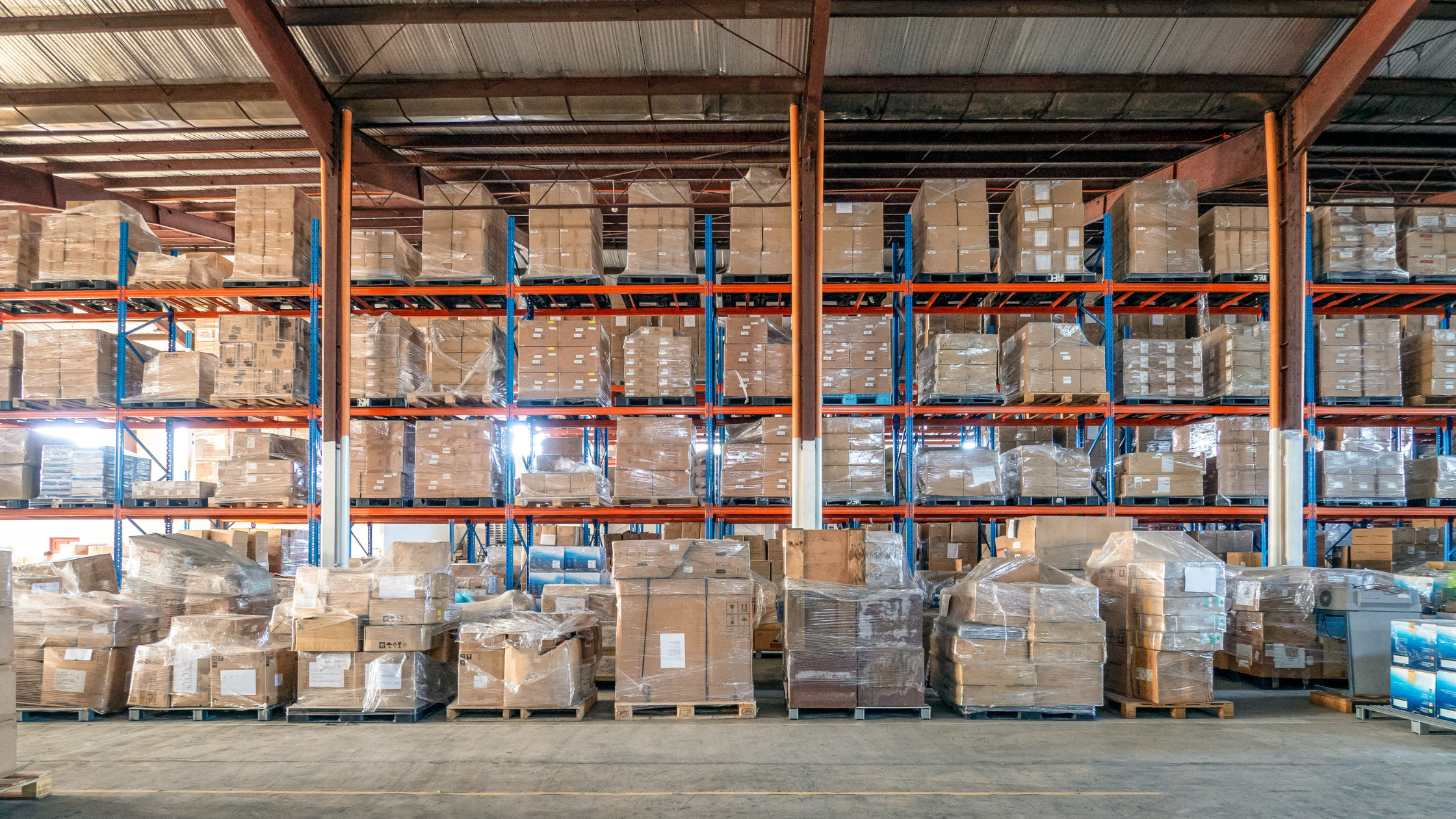
Generally speaking, when packing a pallet you want to use sturdy, undamaged boxes and check the manufacturer’s weight certification stamp on the bottom of the box to ensure the box is suited for the weight of the product. Be sure to fill boxes completely without leaving any air gaps, as empty space in boxes can cause them to collapse under stacking pressure. You’ll also want to use appropriate cushioning inside the boxes, including bubble wrap, air pillows, corrugated inserts, and/or packing peanuts. Finally, seal every box with strong, high-shear adhesive tape that is at least three inches wide.
Stacking Methods
There are three main stacking patterns used when packing pallets. The first, column stacking, involves stacking boxes in straight, vertical columns. Column stacking is best for rigid, uniformly-sized items, as it maximizes compression strength.
The second stacking method is brick/interlocking stacking, which staggers boxes like bricks for added stability. Brick/interlocking stacking is ideal for uniform cartons that require some amount of lateral stability.
The final type of stacking we’ll discuss is pyramid stacking. We recommend that you avoid pyramid stacking, i.e. tapering the load toward the top, as doing so creates an uneven surface that can’t be stacked in a commercial truck. Pyramid stacking also increases the risk of product damage.

General Best Practices for Stacking and Packing Pallets:
- Heaviest boxes always go on the bottom, lightest on top
- Never let boxes overhang the pallet edge
- Keep the top of the load as flat as possible
- Maximum recommended height: 48" to 60" (check carrier specs)
- Place corrugated layer pads between tiers for added stability on taller loads
Securing the Load
Once you’ve chosen the proper pallet(s) and packed the product onto pallets, you’ll want to secure the load. We recommend stretch-wrapping from the bottom up, making at least four to five full rotations of stretch wrap around the entire load. Extend the wrap to include the pallet itself to anchor the load. Also, use corner protectors on taller loads to prevent crushing and to maintain structural integrity. Finally, for heavy or high-value loads, consider adding ratchet straps or banding over the stretch wrap for additional security.
3. Pallet Packing Considerations: Pallet Size and Product Type
Next up in our pallet shipping guide is pallet size. Choose the wrong size pallet for a shipment and you could end up with damaged goods and unhappy customers. Check out these popular pallet sizes you’re likely to encounter, along with their ideal use cases and pros and cons:
- Standard 48” by 40” pallets are the most forgiving and carrier-compatible pallet size in use today. Standard-size pallets allow for maximum stacking configurations and are best when used with rectangular boxes and cartons.
- Larger, 48” by 48” pallets and custom sizes may require additional bracing and security and products shipped with larger-sized pallets should be confirmed with the carrier. One of the potential drawbacks of shipping with larger pallets is that they are more challenging to position in standard trailers.
- Smaller/half pallets can be useful with smaller loads or tight storage environments. Keep in mind that smaller/half pallets may require special handling notes on the Bill of Lading (BOL).
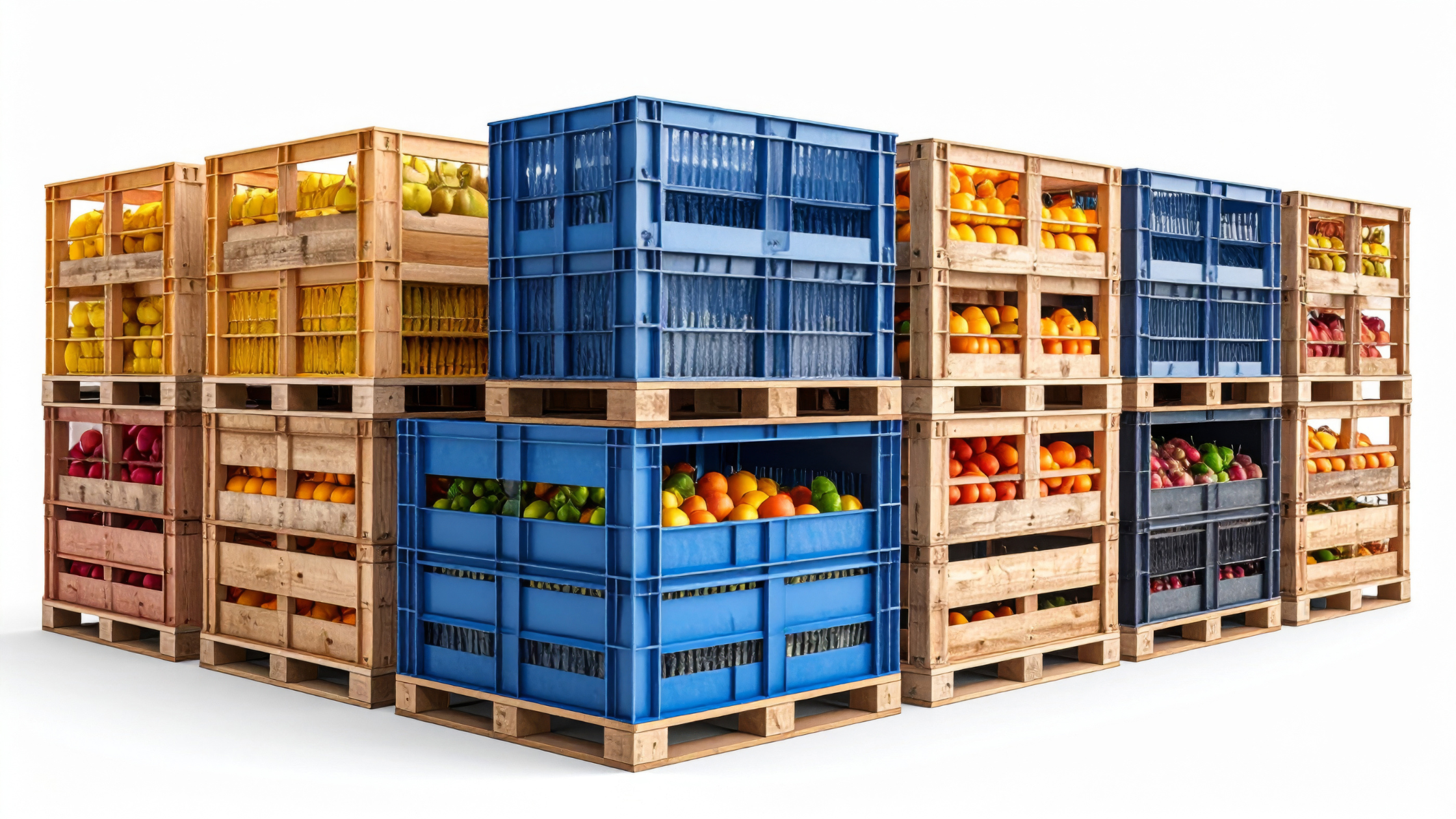
Another important pallet shipping tip that goes hand in hand with pallet size is product type. Ideally, you’re matching the right kind of pallet with the right product. The goal? Get the most from your pallets while providing excellent service to customers. Check out this list of popular types of goods that are shipped with pallets along with best practices for packing with each type:
- Fragile items (glass, electronics, ceramics): Double-box where possible; use rigid corner protectors and extra internal cushioning; consider "This Side Up" and "Fragile" labels; avoid stacking other pallets on top — note this clearly on the BOL.
- Heavy or dense items (machinery, auto parts, steel components): Distribute weight evenly across the pallet surface; use a heavier-duty pallet rated for the load; banding and ratchet straps strongly recommended over stretch wrap alone.
- Irregular or oddly shaped items: Brace and block loose items against movement; build a plywood or cardboard base layer to create a stable surface; ensure no sharp edges protrude through the wrap.
- Liquids or perishables: Use sealed, leak-proof inner packaging; consider absorbent liners; check carrier requirements for temperature-controlled freight.
4. Measuring and Weighing
Now that you’ve chosen the right pallet and packed it sufficiently, it’s time to measure and weigh your pallet(s), which is number four in our pallet shipping guide. Why is this step so important? It’s because inaccurate dimensions and weights are the number one reason for surprise charges and freight reclassifications, which reduces your margins. Also, keep in mind that carriers will routinely re-measure and re-weight shipments so you want to ensure you record weights and measurements accurately.
Measuring Tips
- Measure length, width, and height of the fully loaded and wrapped pallet (not just the pallet itself).
- Round up to the nearest inch.
- Height should include the pallet itself (typically 5"–6" for a standard wood pallet) plus the load.
- If the load is irregular, measure the widest and tallest points.
Weighing Tips
- Weigh the complete pallet including all packaging, wrap, and strapping — not just the product.
- Standard wood pallets weigh approximately 33–48 pounds; factor this into your total.
- Standard pallets can carry between 3,700–4,600 pounds depending on pallet type and material.
- Most LTL carriers have a per-pallet weight limit of 2,000–3,000 pounds — verify with your carrier.
When shipping with pallets, remember that freight class (also known as NMFC class) is determined by density (weight/cubic feet), handling, liability, and stowability. If you misclassify freight, you can face reclassification fees and billing adjustments post-delivery that add up. When unsure of how to classify freight that you’re shipping with pallets, use a freight class calculator or consult your carrier/broker.
Pallet Shipping Tip: Always verify dimensions and weight before submitting your shipment. A difference of a few inches or pounds can push you into a different freight class and significantly change your rate.
5. Get a Shipping Quote
The final step in our pallet shipping guide is getting a shipping quote from a carrier, broker, or provider who offers pallet management services like PalletTrader. In order to get accurate quotes on shipping costs, you need:
- Origin and destination zip codes
- Total weight of the shipment (including pallet)
- Pallet dimensions (L x W x H)
- Freight class or commodity description
- Number of pallets
- Any special services needed: liftgate pickup/delivery, inside delivery, residential delivery, notify prior to delivery, hazmat, etc.
Two shipping options to consider are LTL (less than truckload) and FTL (full truckload). We recommend opting for LTL if you’re a small to mid-volume shipper. Keep in mind that LTL means that your one to six pallets will be sharing trailer space with other freight. LTL is cheaper than FTL but has longer transit times. You’ll want to choose FTL if you’re moving a large volume of goods, need faster transit times, and require dedicated space for the load. FTL usually requires 24 to 30 pallets to fill the entire trailer.
How PalletTrader Simplifies Quoting
If you’re sick of seeing your team sink too much time into getting shipping quotes, consider partnering with PalletTrader to simplify your process. If you use our online marketplace or managed services, you can conveniently access multiple carrier rates online at any time of day or night with a few clicks. As a PalletTrader customer, you also get guidance on freight class and packing requirements to help you avoid reclassification fees and fines, along with expert support no matter the size or scope of your operations.
Don’t Forget Documentation and Labeling
One final thought on how to pack a pallet: documentation and labeling. Keep these things in mind as you document and label your pallet shipments:
- Bill of Lading (BOL): Required for every LTL shipment; includes product description, weight, freight class, shipper/receiver info — carriers won't move freight without it.
- Labels: Place on all four sides of the pallet; include shipper name, address, phone number, receiver name, address, and phone number; label each individual box as well in case of separation.
- Special handling labels: Add "Fragile," "This Side Up," or "Do Not Stack" labels where relevant — though note these are not guarantees of special handling.
Final Thoughts and Key Takeaways
When it comes to how to pack a pallet, remember that most pallet-related problems can be prevented with proper preparation, i.e. by following the five steps outlined in this guide. Other nuggets to take away with you from our pallet shipping guide:
- Pallet prep starts before packing — choosing the right pallet size and condition matters.
- Stacking method depends on box type and product; column stacking is the most universally stable.
- Product type (fragile, heavy, irregular, liquid) should dictate packing materials and securing methods.
- Always measure and weigh the complete, wrapped pallet — not just the product — to avoid reclassification fees.
- Having all shipment details ready before quoting ensures an accurate, competitive rate.
Shipping pallets doesn’t have to be complex but getting it right requires the right combination of materials, planning, and expertise. PalletTrader helps businesses simplify pallet sourcing, optimize packing strategies, and avoid costly mistakes.
Ready to ship? Contact PalletTrader to get started.